Dragon tattoos are a popular choice among tattoo enthusiasts, symbolizing strength, power, and mystique. These mythical creatures often feature intricate designs with scales, claws, and fiery breath, allowing for creative and unique interpretations. Some people choose dragon tattoos to reflect a connection with Eastern cultures, where dragons hold auspicious meanings and are seen as symbols of good fortune. Others opt for Western-style dragons, emphasizing a more medieval and fantastical aesthetic. Regardless of the style, dragon tattoos offer a versatile canvas for self-expression and can carry personal significance for those who choose to adorn their bodies with these majestic creatures.
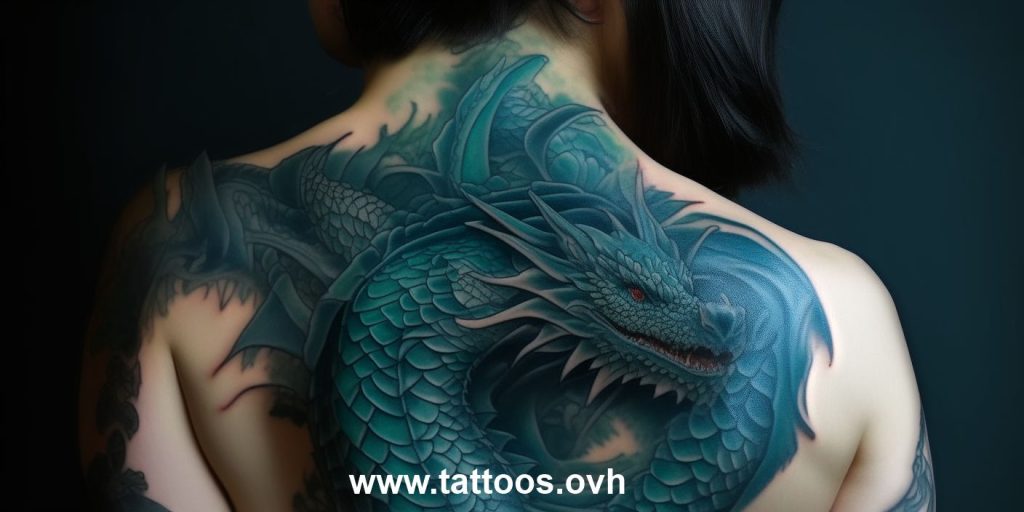
Absolutely thrilled with my new tattoo featuring a vibrant green dragon on my back! The intricate details and shading make it truly mesmerizing. The symbolism of the dragon resonates with me, representing strength and resilience. The artist’s skill in bringing this mythical creature to life is commendable, and I couldn’t be happier with the result.
Types of dragons and their meaning
The Eastern Dragon – Chinese or Japanese
The Eastern Dragon, whether in Chinese or Japanese culture, is a mythical creature deeply rooted in Eastern mythology and symbolism. In Chinese traditions, it is known as “Long” (龙), while the Japanese term is “Ryū” (龍). Unlike its Western counterpart, the Eastern Dragon is generally portrayed as a benevolent and auspicious being, symbolizing good fortune, wisdom, and power. With a sinuous and serpentine form, it often has four claws, denoting its imperial status.
In Chinese belief, the dragon is associated with the Emperor and considered a symbol of imperial power and authority. It is also connected to rain, agriculture, and the well-being of the people. In Japanese culture, the dragon is seen as a guardian and protector, with associations to water sources and rainfall.
The imagery of the Eastern Dragon is prevalent in various art forms, including paintings, sculptures, and traditional celebrations like the Chinese New Year. Many people embrace the Eastern Dragon as a positive symbol, often incorporating its likeness into art, clothing, and, of course, tattoos, to invite good fortune and positive energy into their lives.
The Western Dragon – European
The Western Dragon is a mythical creature deeply ingrained in Western folklore and mythology. Unlike its Eastern counterpart, the Western Dragon is often portrayed as a menacing and fire-breathing creature, symbolizing chaos and threat. In European legends, dragons are typically depicted as creatures that terrorize villages and hoard treasures. They are frequently featured in tales of heroic knights embarking on quests to slay the dragon and rescue a captive princess.
Western Dragons are known for their large wings, scaly bodies, and sharp claws. The concept of the Western Dragon has influenced numerous stories, artworks, and cultural representations in Western literature and art. While Eastern dragons are often associated with positive qualities, Western dragons have historically been linked to danger and the triumph of good over evil in various mythologies and fairy tales.
The Water Dragon
The Water Dragon is a mythical creature often associated with water elements and is present in various cultures and mythologies worldwide. This type of dragon is typically linked to bodies of water such as rivers, lakes, and oceans. In different traditions, the Water Dragon is seen as a guardian or ruler of aquatic domains.
In some Asian cultures, especially Chinese and Japanese, the Water Dragon is considered a symbol of strength, adaptability, and fluidity. It is believed to have control over rain and water-related phenomena, playing a crucial role in ensuring a balance in the natural elements.
The Water Dragon is often depicted with serpentine characteristics, emphasizing its affinity with aquatic environments. In mythology, it may be associated with benevolent qualities, offering protection to sailors or ensuring the fertility of lands through its connection to water.
Tattoos featuring Water Dragons are popular among those who seek symbolism related to adaptability, emotional depth, and the ebb and flow of life’s experiences.
The Fire Dragon
The Fire Dragon is a mythical creature often characterized by its association with the element of fire. In various cultures and mythologies, this dragon is portrayed as a powerful and fearsome being, breathing flames and exuding a fiery presence. The Fire Dragon is commonly linked to both destruction and protection, embodying the dual nature of fire.
In many Western legends, fire-breathing dragons are depicted as formidable adversaries, often requiring brave knights or heroes to confront and vanquish them. The fiery breath symbolizes the destructive power of these dragons, capable of laying waste to villages and landscapes.
Conversely, in some Eastern cultures, particularly in Chinese mythology, the Fire Dragon may have a more positive connotation. It can represent passion, energy, and vitality, aligning with the transformative and purifying aspects of fire. In Chinese astrology, individuals born in the Year of the Dragon are associated with the Fire Dragon, signifying strength, charisma, and a bold spirit.
Fire Dragon imagery is frequently used in various art forms, including tattoos, where it can serve as a symbol of strength, intensity, and the ability to overcome challenges with fiery determination.
The Air Dragon
The Air Dragon is a mythical creature often associated with the element of air or wind. Unlike some other dragon archetypes, the Air Dragon is characterized by its ethereal and airborne nature. In various cultures, it symbolizes freedom, intellect, and a connection to the sky.
In some mythologies, particularly in Western fantasy, the Air Dragon might be depicted with wings spanning great distances, enabling it to soar through the skies effortlessly. The creature is often seen as a symbol of transcendence, representing the ability to rise above challenges and gain a broader perspective.
The Air Dragon is sometimes linked to the concept of wisdom and intellect due to its association with the sky, which is often considered a realm of higher knowledge. In artistic representations, it may be portrayed as a majestic and graceful being, harnessing the power of the wind.
Tattoos featuring Air Dragons are sought after by those who value qualities such as freedom, intellectual curiosity, and the aspiration to reach new heights in life.
Hate Dragon
The concept of a “Hate Dragon” is not a traditional or widely recognized mythical archetype. Dragons in mythology are often symbolic creatures with various cultural interpretations, and their characteristics can represent both positive and negative aspects. If you’re referring to a dragon associated with hate or malevolence, it might be a modern or fictional creation.
In fantasy literature or art, a “Hate Dragon” could be a metaphorical representation of destructive forces, embodying negative emotions or the darker aspects of human nature. Such a creature might symbolize hatred, anger, or the internal struggles that individuals face.
Remember that the idea of a “Hate Dragon” is not rooted in classical mythology and is likely to be a creative or symbolic concept within a specific context, such as literature, art, or personal interpretation.
The Guardian Dragon
The Guardian Dragon is a mythical creature often associated with protection and watchfulness. In various cultures and mythologies, this type of dragon is depicted as a benevolent and nurturing force, safeguarding specific places, treasures, or individuals.
Guardian Dragons are commonly seen as protectors of valuable artifacts, sacred lands, or even entire communities. They symbolize strength, wisdom, and a sense of responsibility towards the well-being of those under their watch.
In some Eastern traditions, especially in Chinese and Japanese mythology, Guardian Dragons are believed to bring good fortune and luck. Temples and shrines may feature dragon sculptures as guardians, symbolizing their protective role.
The Guardian Dragon concept has also found its way into modern fantasy literature and art, where these dragons are portrayed as benevolent and wise beings, often forming bonds with characters they watch over.
Tattoos featuring Guardian Dragons are popular among those who seek symbols of protection, guidance, and the positive aspects of the dragon archetype.